


















Morally Bankrupt People Are Building the Most Dangerous Technology on Earth
The Epstein files don’t just expose a scandal. They expose who controls artificial intelligence. That should terrify you. New Delhi [India], February 13: Shekhar Natarajan, the Founder and CEO of Orchestro.AI, warns that morally bankrupt people are building the most dangerous technology on Earth. READ THE ROOM Let’s be precise about what just happened. On [...]

The Epstein files don’t just expose a scandal. They expose who controls artificial intelligence. That should terrify you.
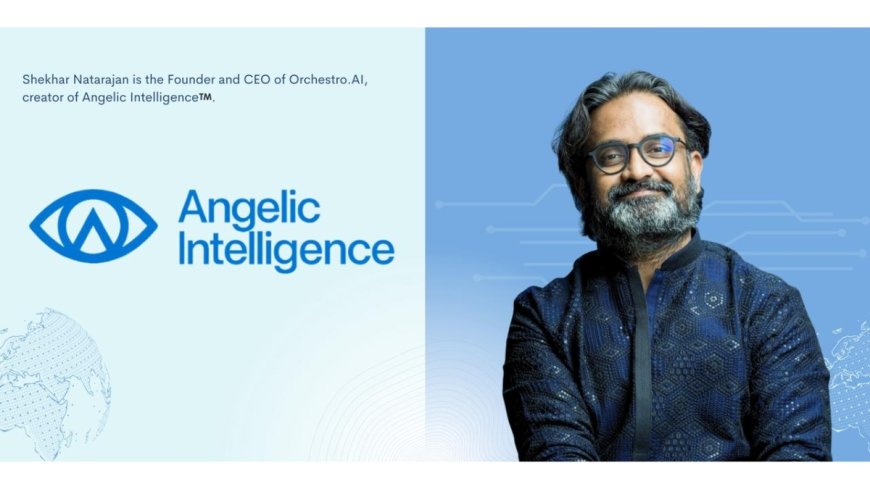
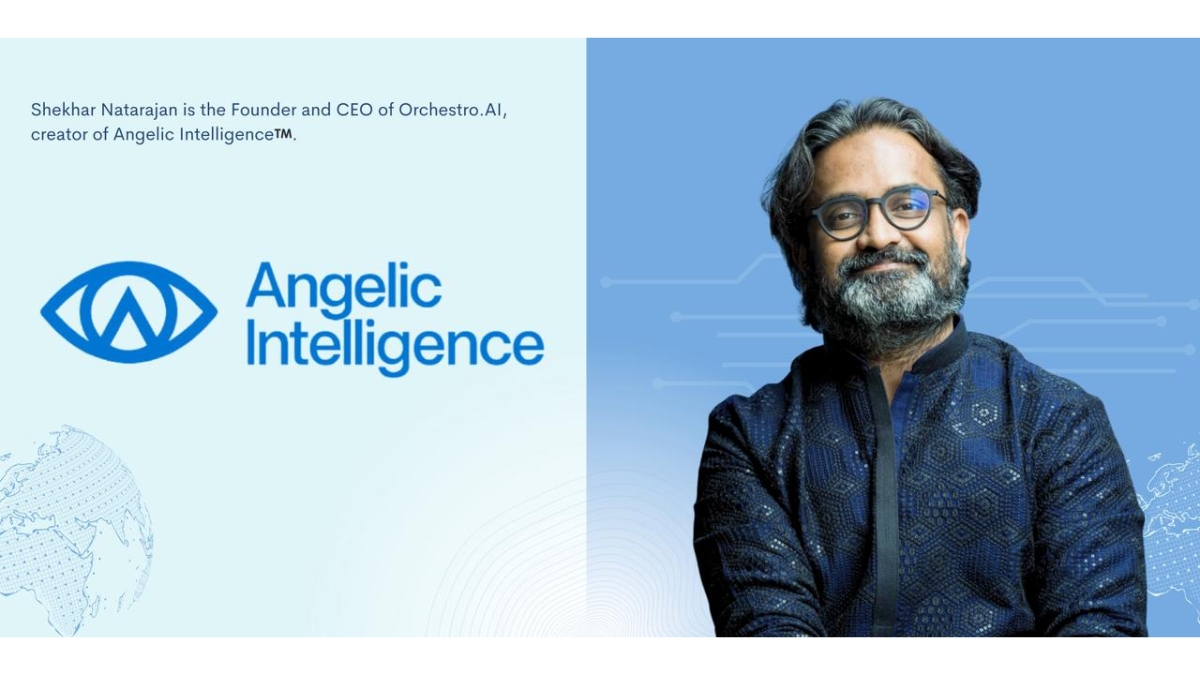
New Delhi [India], February 13: Shekhar Natarajan, the Founder and CEO of Orchestro.AI, warns that morally bankrupt people are building the most dangerous technology on Earth.
READ THE ROOM
Let’s be precise about what just happened.
On January 30, 2026, the United States Department of Justice released 3.5 million pages of files documenting Jeffrey Epstein’s network. 2,000 videos. 180,000 images. The largest single disclosure of criminal evidence in American history. And buried in those pages, name after name after name, are the people who built, fund, and control the artificial intelligence systems that now govern nearly every aspect of your daily life.
Not tangentially. Not peripherally. Centrally.
One figure: 2,658 file mentions. Another: 2,592. Another: 2,281. Another: 1,116 mentions, including asking about the “wildest party” on a private island owned by a convicted child sex offender. Co-founders of the world’s dominant search engine: 600+ combined files. The CEO of the world’s largest social network: 282 files. The founder of the world’s largest e-commerce platform: 196 files. Scheduling emails. Dinner confirmations. Travel arrangements. Investment discussions. All continuing for years—years—after Epstein’s 2008 criminal conviction for sex crimes against minors.
These are not bystanders. These are the architects of the technology you are trusting with your data, your children’s attention, your medical records, your financial future, and increasingly, your democracy.
IT GETS WORSE
The files also reveal that Epstein’s email exchanges with AI researchers—people embedded in the intellectual infrastructure of the companies building the AI you use today—included discussions about eugenics, the supposed merits of fascism, population control through climate change, and theories about cognitive differences between sexes.
Let that land.
The people shaping the intellectual foundations of artificial intelligence—the models that decide what content your children see, what loans you qualify for, what medical treatments are recommended, which résumés get flagged and which get trashed—were exchanging ideas about eugenics and fascism with a convicted child sex trafficker. And the billionaires who fund those researchers, who sit on those boards, who greenlight those products—they were at the same dinners. Year after year. Post-conviction. In writing.
This is not a scandal. Scandals end. This is the permanent moral architecture of the industry that controls AI.
THE “ETHICAL AI” FRAUD
And here is the part that should make you furious: these same people lecture the world about “responsible AI.”
They publish AI ethics white papers. They fund AI safety institutes. They hire Chief Ethics Officers and appoint Trust & Safety teams and issue annual Responsible AI reports with glossy charts and carefully worded principles. They stand on stages at Davos and Aspen and the UN and deliver speeches about the importance of building AI that serves humanity.
Then they go to dinner with a child sex offender.
Ethical AI, as practiced by Silicon Valley, is theater. It is a performance designed to buy time, deflect regulation, and create the illusion of accountability while the underlying system—the network of access and complicity and moral bankruptcy that the Epstein files have now exposed—continues to operate exactly as designed.
You cannot ethics-wash your way out of 3.5 million pages. You cannot publish a blog post about “AI for Good” when your professional network included a convicted predator. You cannot appoint a Trust & Safety board when the board room’s social graph includes emails asking about island parties.
“Ethical AI is theater. You can’t bolt morality onto a system built by people who have none. Ethics isn’t a feature you ship in version 2.0. It’s the foundation you pour before you build anything. Silicon Valley skipped the foundation. The Epstein files are the building inspection report.” — Natarajan
THE UNFORGIVABLE PART
Here is what the apologists will say: These were social connections. Attending a dinner doesn’t mean complicity. Guilt by association is unfair.
No.
When you attend a dinner with a convicted child sex offender—after his conviction—you are making a calculation. You are deciding that the social capital, the deal flow, the network access, the proximity to power is worth more than the suffering of the children he abused. You are running a cost-benefit analysis on human trafficking and concluding that the benefits outweigh the costs. That is a moral choice. And it reveals everything about what kind of systems you will build.
Because the same calculation runs inside the AI. Maximize engagement even if it damages mental health. Optimize ad revenue even if it amplifies disinformation. Extract data even if it violates privacy. Ship the product even if the bias hasn’t been fixed. The risk-reward calculation is identical: the benefits to us outweigh the costs to them.
That is the moral operating system of Silicon Valley. The Epstein files didn’t create it. They just revealed the source code.
“The same people who couldn’t say no to a dinner with a predator are asking you to trust them with the most consequential technology in human history. The 3.5 million pages are not ancient history. They are the character reference for the people building your future. Read them.” — Natarajan
THE ALTERNATIVE EXISTS
It does not have to be this way. And the proof is not theoretical—it is operational, deployed, and scaling.
Decades before the Epstein dinners, in a one-room slum in Hyderabad, India, a boy was receiving a different moral education. No electricity. No running water. Eight people in one room. A father who earned $1.75 a month delivering telegrams by bicycle and gave most of it away. A mother who stood outside a headmaster’s office for 365 consecutive days to get her son into school, then pawned her silver wedding toe ring—thirty rupees—to pay the fees.
That boy studied under a street light. He arrived at Georgia Tech with fifty dollars. He slept in his car. He worked five jobs. He built logistics systems at Coca-Cola, PepsiCo, Disney, Walmart, Target, and American Eagle. He filed 300 patents. He grew Walmart’s grocery business from $30 million to $5 billion. Then he walked away from the corporate machine and built something the Valley cannot comprehend: AI where virtue is the architecture, not the afterthought.
Shekhar Natarajan’s Angelic Intelligence doesn’t bolt on ethics. It doesn’t publish an annual Responsible AI report. It doesn’t appoint a board of advisors who attended dinners with predators. It embeds twenty-seven Virtue Agents—Compassion, Transparency, Humility, Temperance, Forgiveness—directly into the computational architecture. A Compassion Agent routes medicine before luxury goods. A Transparency Agent logs why every decision was moral. The system tracks dignity preserved per decision.
And because Natarajan grew up across cultures—raised in the moral frameworks of South India, educated across American institutions, shaped by operational roles spanning six continents—he built something the monocultural bubble of Silicon Valley could never conceive: a configurable system of virtues. Angelic Intelligence doesn’t impose a single Western ethical framework on the world. It allows different cultural value systems to be configured into the architecture—because a boy from the slums of Hyderabad understands something the billionaires at the dinner table never will: virtue is not one-size-fits-all. Dignity is universal. The expression of it is local.
“The world doesn’t need another AI ethics white paper written by people who dined with predators. It needs virtue-native AI—systems where morality isn’t a patch you apply after the damage. It’s the architecture you start with. That’s what we built. From scratch. From a street light in Hyderabad.” — Natarajan
In January 2026—the same month the Epstein files dropped—Natarajan launched Angelic Intelligence Matching at Davos, diverting $890 billion in retail returns from landfills to families in need. Compassion Agents matched surplus baby products in Chicago to a nonprofit serving infants. Automatically. No human override needed. The virtue was in the code.
The morally bankrupt are building your AI. The man from the slum is building the replacement. Choose.
Shekhar Natarajan is the Founder and CEO of Orchestro.AI, creator of Angelic Intelligence . Davos 2026 opening keynote. Tomorrow, Today podcast (#4 Spotify). Signature Awards Global Impact laureate. 300+ patents. Georgia Tech, MIT, Harvard Business School, IESE. Grew up in a one-room house in the slums of Hyderabad. No electricity. Father earned $1.75/month on a bicycle. Mother stood outside a headmaster’s office for 365 days. One son, Vishnu. Paints every morning at 4 AM. Does not appear in the Epstein files.
If you object to the content of this press release, please notify us at pr.error.rectification@gmail.com. We will respond and rectify the situation within 24 hours.
What's Your Reaction?