

















PANKHUDI Portal Launched: A 2026 Digital Push for Women and Child Welfare
New Delhi [India], January 17: The Ministry of Women and Child Development launched a digital portal, PANKHUDI, on January 8, 2026, an integrated system to enhance partnerships for women and child development in India. Union Minister Smt. Annpurna Devi, Minister of State, Smt. Savitri Thakur and Secretary Shri Anil Malik officially launched the portal. The [...]

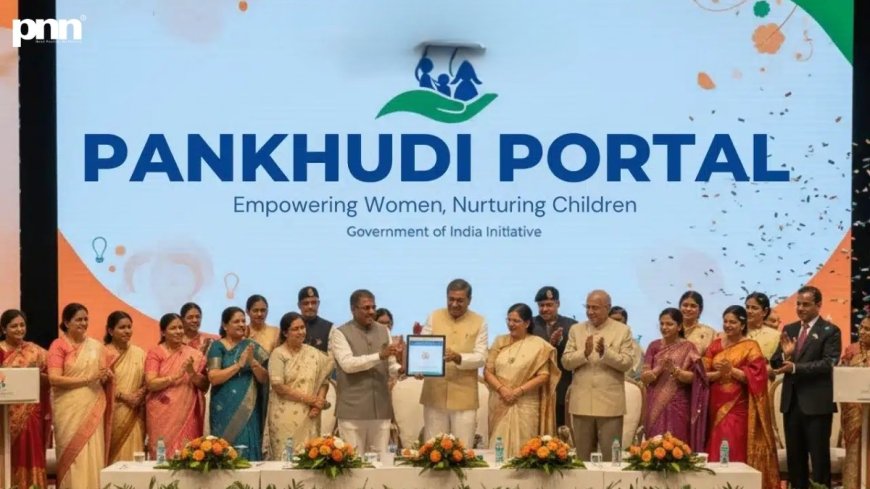

New Delhi [India], January 17: The Ministry of Women and Child Development launched a digital portal, PANKHUDI, on January 8, 2026, an integrated system to enhance partnerships for women and child development in India.
Union Minister Smt. Annpurna Devi, Minister of State, Smt. Savitri Thakur and Secretary Shri Anil Malik officially launched the portal. The message was clear. Welfare cannot be supported only by paperwork and goodwill. It needs systems. Digital ones.
The construction of PANKHUDI is based on a single-window platform. One login. One dashboard. It creates a common space where individuals, non-governmental organisations, corporate CSR contributors, research institutions, and government agencies come together with a shared goal. Deliver outcomes for women and children.
Why the Portal Matters Now
India already runs some of the largest women and child welfare programmes in the world. Scale has never been the problem. Coordination has.
CSR funds exist. Voluntary efforts exist. Government schemes exist. What was missing was a clean bridge between them.
That gap is where the PANKHUDI portal steps in.
Aligned with Prime Minister Narendra Modi’s focus on technology as a connector between government and citizens, and rooted in the idea of Jan Bhagidari, the portal turns participation into a process. No ambiguity. No scattered efforts. No black boxes.
One Platform, Multiple Stakeholders
The real strength of the PANKHUDI portal lies in who it brings together.
The platform is open to:
Philanthropists and individuals
Non-Resident Indians
Non-Governmental Organisations
Business organisations and CSR departments
Central and State Government departments
All stakeholders operate on the same interface. Contributions are mapped. Proposals follow defined workflows. Every participant knows where the support is directed.
The thematic focus areas include nutrition, health, Early Childhood Care and Education, child protection, rehabilitation, women’s safety, and empowerment. Together, they cover the full lifecycle of care.
How PANKHUDI Simplifies CSR
CSR in India is not short of funds. It is burdened by complexity.
Multiple approvals. Limited visibility. Weak tracking.
PANKHUDI addresses these gaps.
Donors can register, identify initiatives, submit proposals, and track approvals entirely online. Processes are structured. Guesswork is eliminated. Follow-up calls and lost emails are reduced.
All financial contributions are accepted only through non-cash modes, ensuring built-in traceability. Transparency is not an aspiration here. It is the default setting.
This directly improves the ease of doing CSR in a practical, operational way.
Supporting Flagship Women and Child Missions
The portal functions as a direct enabler of the Ministry’s flagship programmes.
These include:
Mission Saksham Anganwadi and Poshan 2.0
Mission Vatsalya
Mission Shakti
PANKHUDI aligns CSR and voluntary contributions with mission priorities. Funding follows need. Partnerships follow outcomes. Monitoring becomes measurable.
This is policy implementation through a dashboard.
Transparency by Design
Accountability is central to the PANKHUDI portal.
Every proposal, approval, and contribution is digitally recorded. Progress is visible to stakeholders. Implementing agencies are clearly identified. Outcomes can be tracked over time.
This level of transparency builds trust not only among corporates and NGOs, but also among citizens who rely on these services.
It represents a quiet but meaningful upgrade in governance, where credibility becomes as important as funding.
Impact on Anganwadi and Care Institutions
The real impact unfolds on the ground.
The portal strengthens infrastructure and services across:
Over 14 lakh Anganwadi Centres
Around 5,000 Child Care Institutions
Nearly 800 One Stop Centres
More than 500 Sakhi Niwas
Over 400 Shakti Sadan
These frontline institutions serve crores of citizens daily.
Better coordination leads to improved nutrition delivery, safer environments, faster rehabilitation, and stronger support systems for women and children.
This is digital governance translating into real-world outcomes.
India Context and the Bigger Picture
India’s welfare ecosystem is vast. Execution at scale has always been the challenge.
PANKHUDI is part of a broader shift towards platform-based governance. One portal. Multiple stakeholders. Clear outcomes.
For corporates, it reduces friction. For NGOs, it improves visibility. For the government, it brings order. For citizens, it enhances service delivery.
This is not a disruption. It is discipline.
What Comes Next
The launch of PANKHUDI is a beginning, not a conclusion.
Its impact will depend on adoption. Its success will rest on stakeholder participation. Continuous improvement will determine its longevity.
What is already evident is the intent. India’s approach to women and child development is moving from a fragmented effort to a structured execution.
And that is how systems deliver results.
What's Your Reaction?