





















Discovery of Titania’s Woolly Bat (Kerivoula titania – 2026)
India has taken another step toward uncovering the mysteries of its untrodden forests. Titania has made an appearance in the country with the discovery of her woolly bat, Kerivoula titania, in the Khasi Hills of Meghalaya. This is a rare and precise discovery, signalling that Northeast India is still a treasure trove for both biodiversity [...]

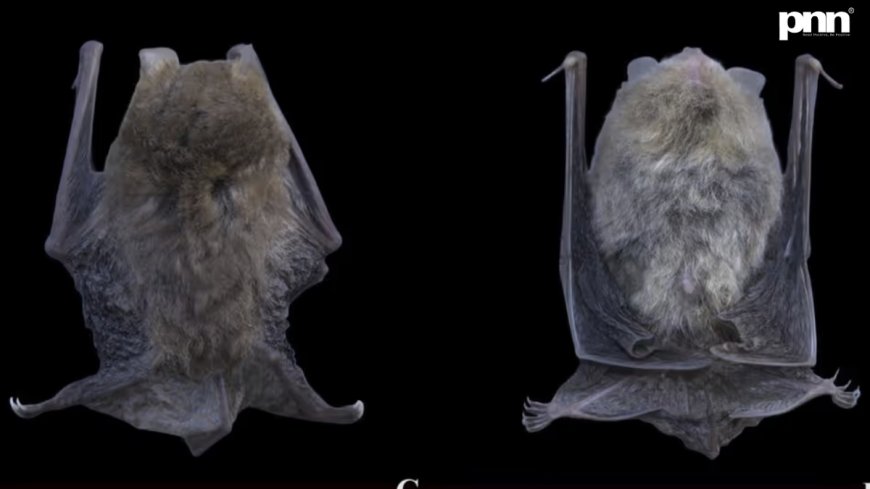

India has taken another step toward uncovering the mysteries of its untrodden forests. Titania has made an appearance in the country with the discovery of her woolly bat, Kerivoula titania, in the Khasi Hills of Meghalaya. This is a rare and precise discovery, signalling that Northeast India is still a treasure trove for both biodiversity lovers and scientists.
The Discovery That Moved the Map
The lone male specimen extended the known range of this elusive bat westward by almost 500 kilometres, an astonishing geographic expansion. With this addition, India’s total bat diversity now stands at 137 species, highlighting just how underexplored these forests remain.
The bat was found during a December 2024 field survey in a community-owned forest near Thankharang village, East Khasi Hills. Work began at 7:30 pm under the dim forest canopy. A two-bank harp trap supplemented with pre-recorded ultrasonic echolocation calls successfully captured the specimen.
Every step of this research followed international mammalogical and ethical protocols, ensuring that the bat was unharmed. This wasn’t luck — it was the result of thorough planning, precision, and patience.
How Gegeneophis valmiki Was Confirmed by Scientists
Confirming Gegeneophis valmiki was no small feat. Researchers used:
-
Morphology
-
Craniodental measurements
-
Wing structure assessments
-
Echolocation analyses
-
Mitochondrial DNA sequencing
For the first time in India, the species’ baculum (penile bone) was described, providing a crucial anatomical reference for future studies.
Co-author Gábor Csorba cross-checked the specimen against 18 individuals from Vietnam and Cambodia to verify the identification. Historically, Kerivoula titania was believed to be confined to Southeast Asia — Myanmar, Thailand, Laos, Cambodia, Vietnam, and Yunnan in China. Earlier records from Taiwan and Hainan were later recognized as Kerivoula furva, highlighting the importance of careful scientific verification.
Phylogenetic analysis confirmed that the Indian specimen belongs to a distinct evolutionary clade, separate from the hardwickii species complex, cementing this as a landmark discovery.
Why This Discovery Matters
The significance of this find is multi-layered:
-
Biodiversity boost: India now officially hosts 137 bat species. Each addition strengthens the country’s wildlife profile.
-
Geographical insight: The species’ range has expanded nearly 500 km west, reshaping our understanding of its ecological distribution.
-
Community forests: The bat was found in a community-managed forest, underscoring the importance of local stewardship in conservation.
-
Scientific value: Anatomical and genetic references provide a foundation for evolutionary, ecological, and taxonomic studies.
-
Conservation alert: Northeast India’s forests remain largely unexplored, and each survey continues to reveal species unknown to science.
A Glimpse Into the Bat’s Life
No flashy colours. No oversized eyes. Gegeneophis valmiki is a true shadow-dweller, navigating using ultrasonic echolocation while spending most of its life hidden beneath leaves or inside tree hollows.
Its elusive nature explains why biodiversity fieldwork is not for the faint-hearted. Patience, attention to detail, and respect for the ecosystem are non-negotiable. Unlike tigers or elephants, these bats work silently in the background, maintaining balance in ways most people never notice
Closing Thoughts
Eventually, Gegeneophis valmiki is not just another name on a species list. It is a vivid reminder that nature conceals its treasures in plain sight, and curiosity, patience, and keen observation uncover them. As co-researcher Gábor Csorba notes, “Even the smallest, most hidden creatures have stories worth telling.”
This discovery is a call to action: protect forests, fund research, and value India’s biodiversity. No species, however small or obscure, is irrelevant. By safeguarding even the tiniest life forms, we protect entire ecosystems. Conservation is not optional — it is a necessity.
Gegeneophis valmiki proves that even the smallest creatures can teach big lessons. Every hidden species uncovered strengthens our understanding of nature and underscores why conservation and research are non-negotiable for India’s biodiversity.
What's Your Reaction?